
Stand in the honey aisle long enough and you'll see it: a plastic bear, $4, next to a glass jar priced three times higher. Same word on both labels. Nothing else about them is actually the same.
The price isn't hiding anything. It's telling you exactly what's in the jar.
The squeeze bear takes a shortcut
Most honey on a grocery shelf gets heated hot enough to run fast through industrial equipment, then filtered hard enough to strip out the pollen, the wax flecks, the cloudiness — everything that makes honey look and taste like it came from a hive instead of a factory. What's left pours smooth, stays clear, never sets up in the jar. Fast to make. Cheap to sell.
That heat costs something, though. Get honey hotter than about 104°F and it starts losing the stuff that makes it worth eating raw. One key enzyme, a kind of built-in proof that honey hasn't been faked, drops by more than half in minutes flat. The antioxidants people buy raw honey for take a real hit too. And the pollen — the part that actually ties a jar back to a real bloom and place — mostly disappears. Stay under that temperature line, and honey keeps almost everything the bees put into it. That's the whole case for raw.
Real honey means real work
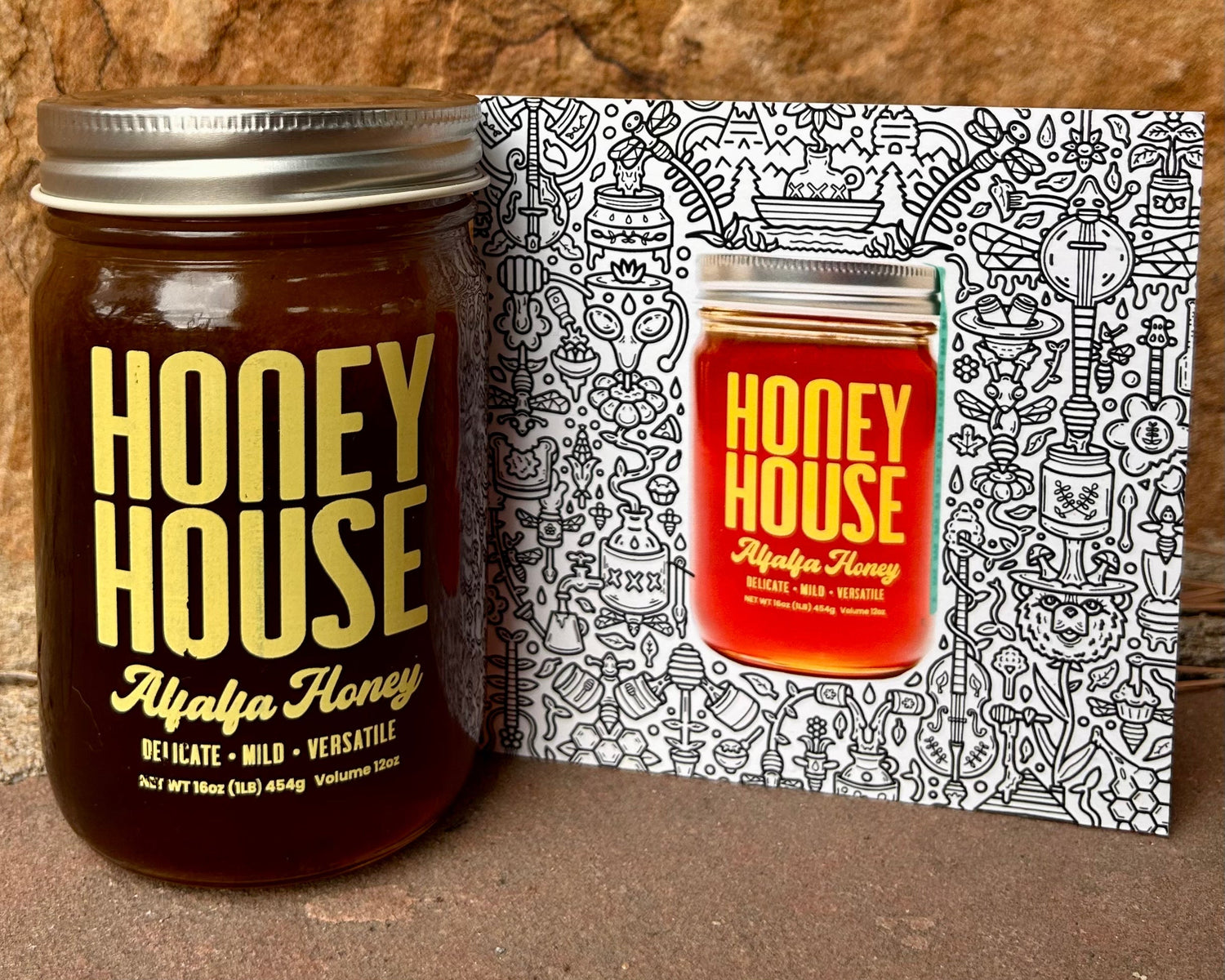
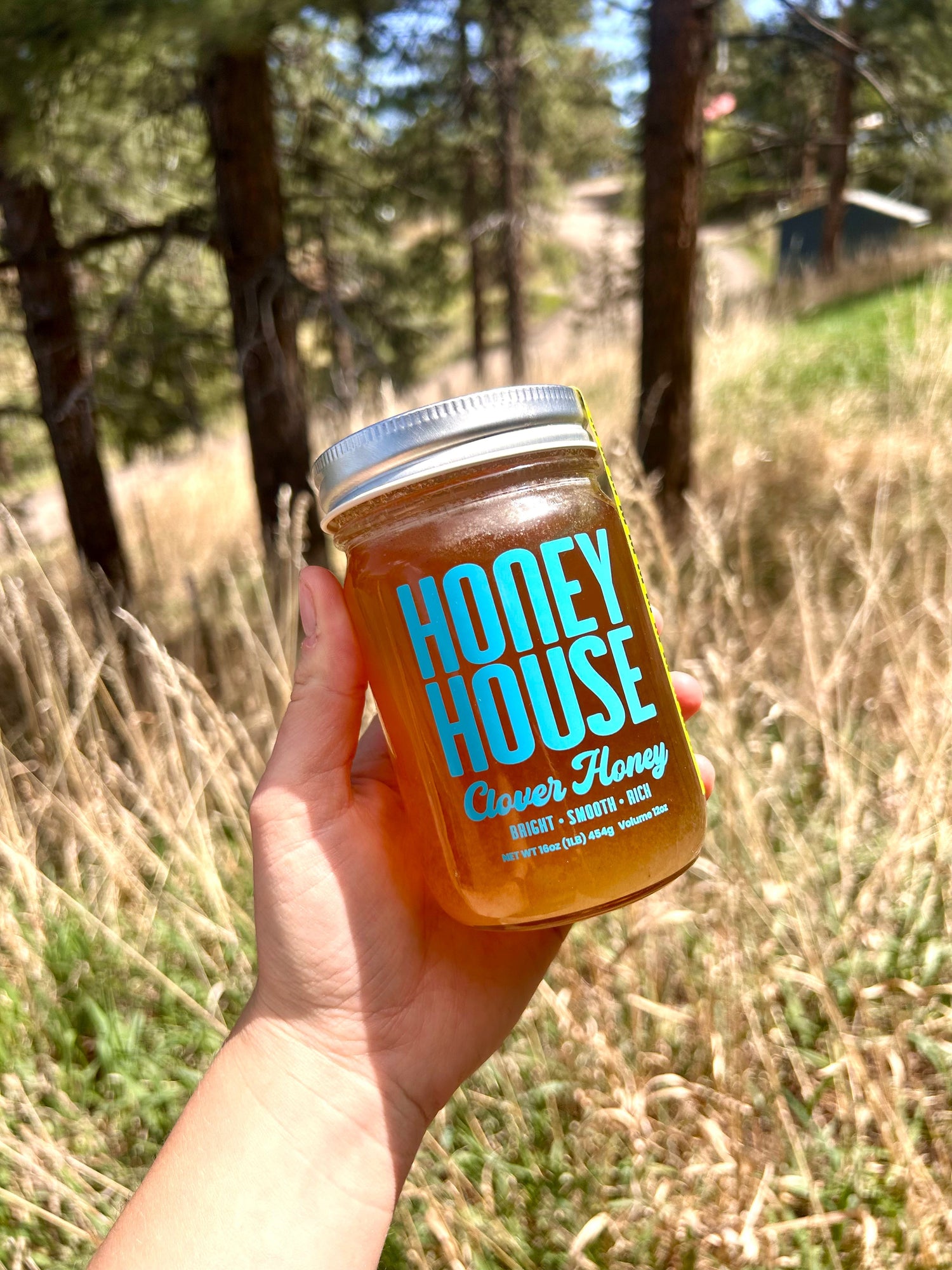
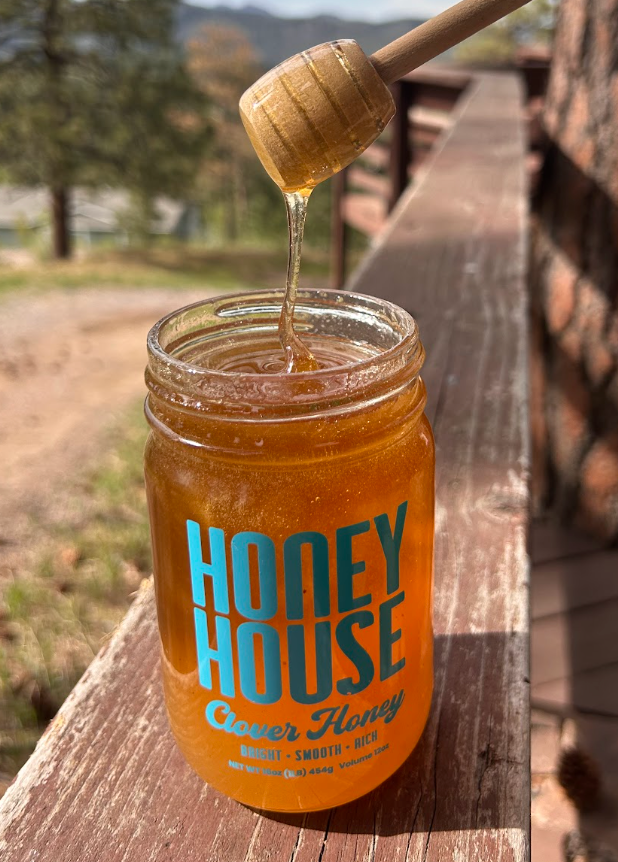
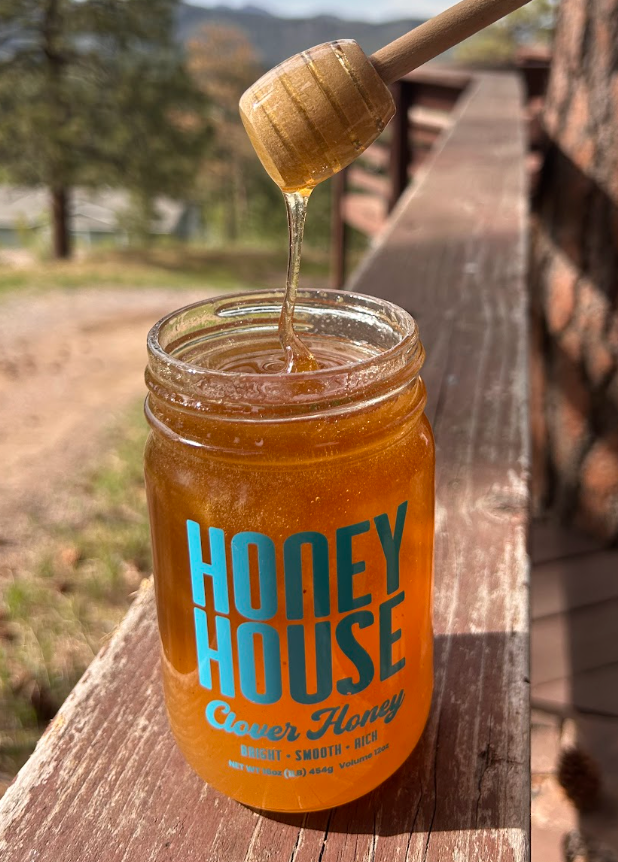
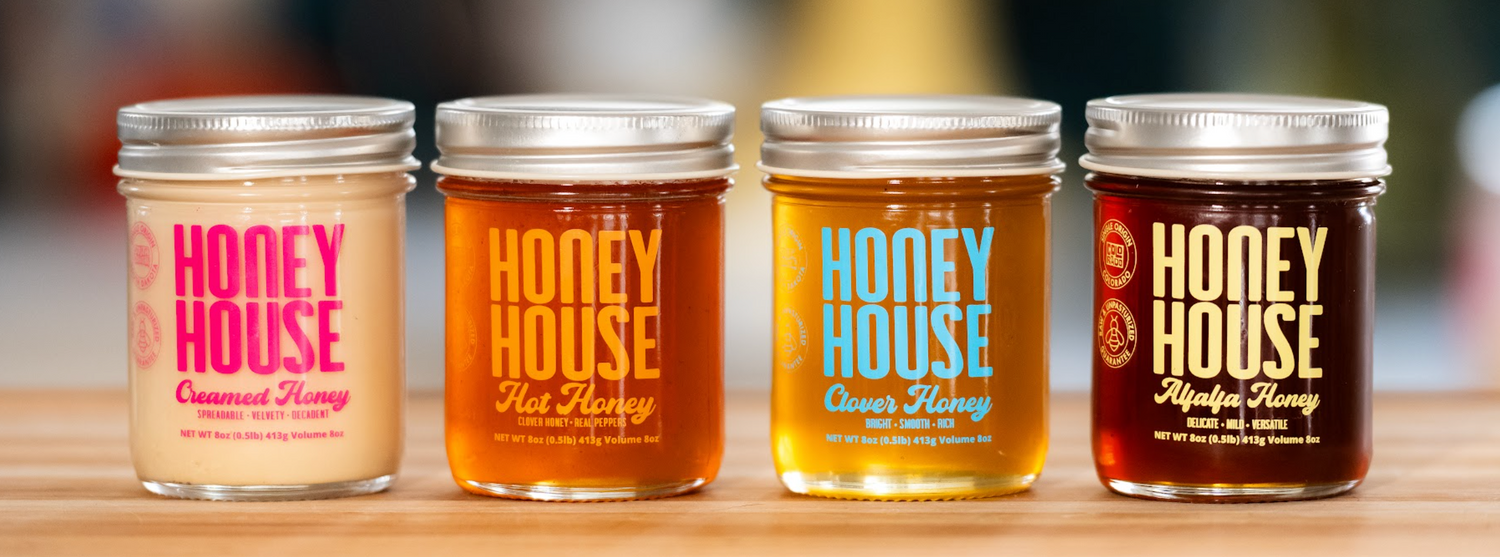
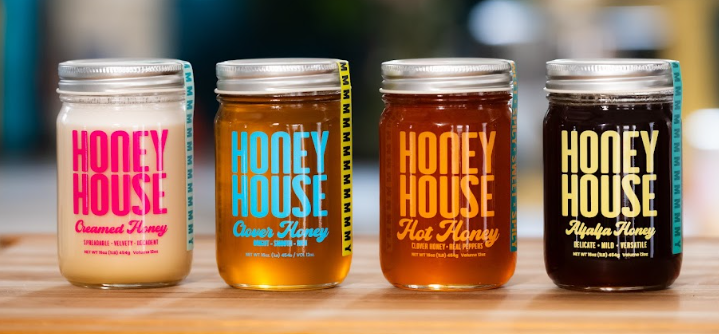
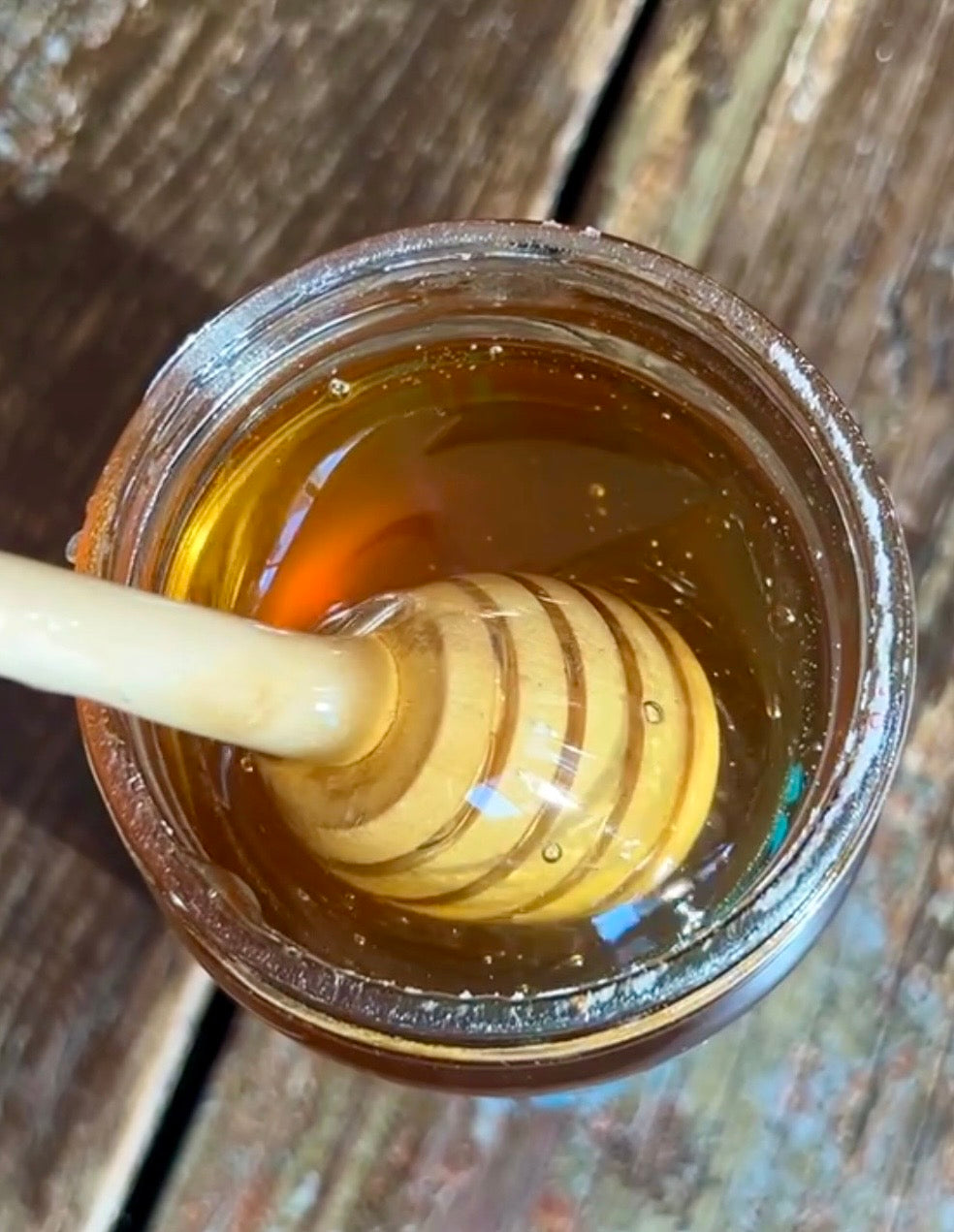
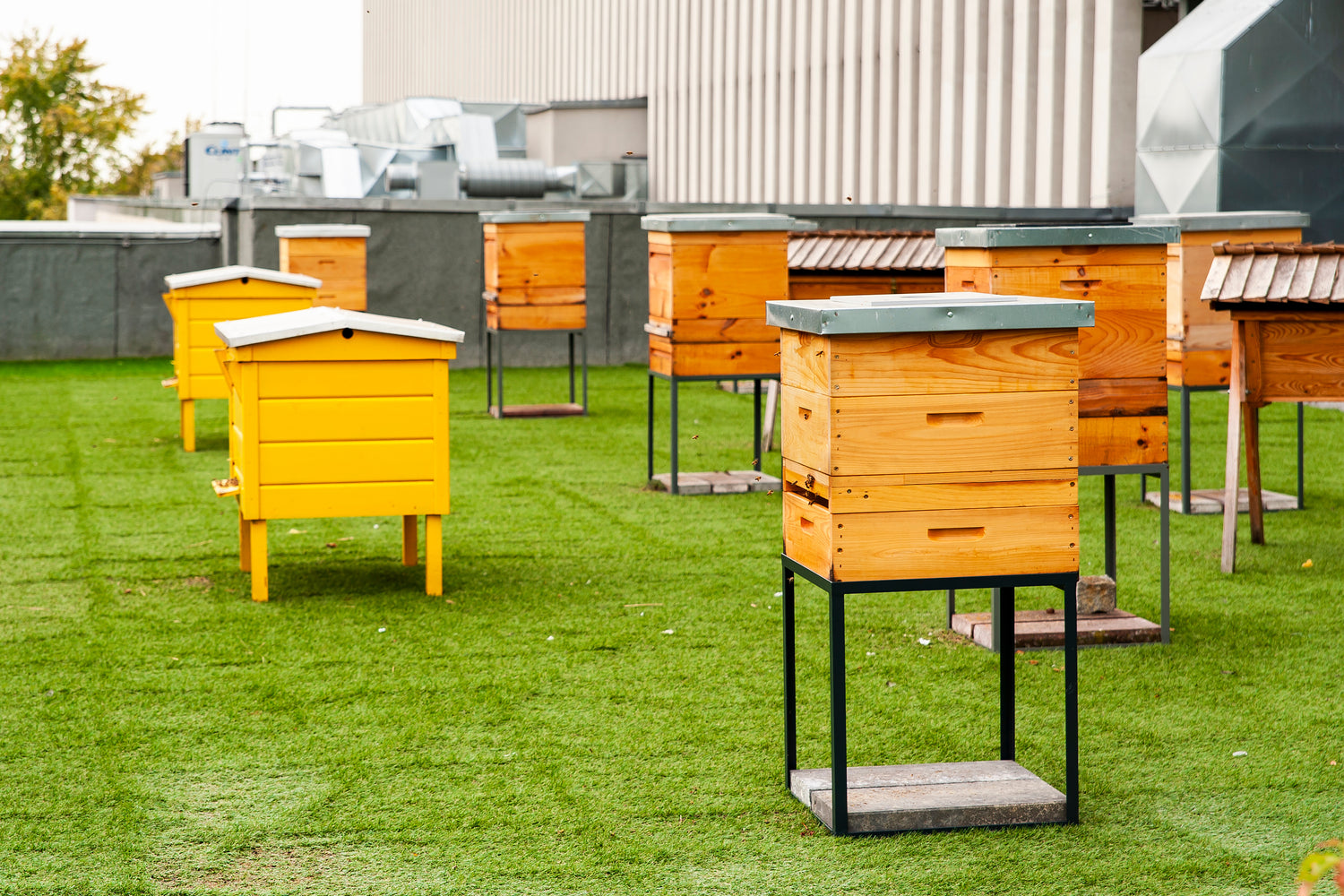
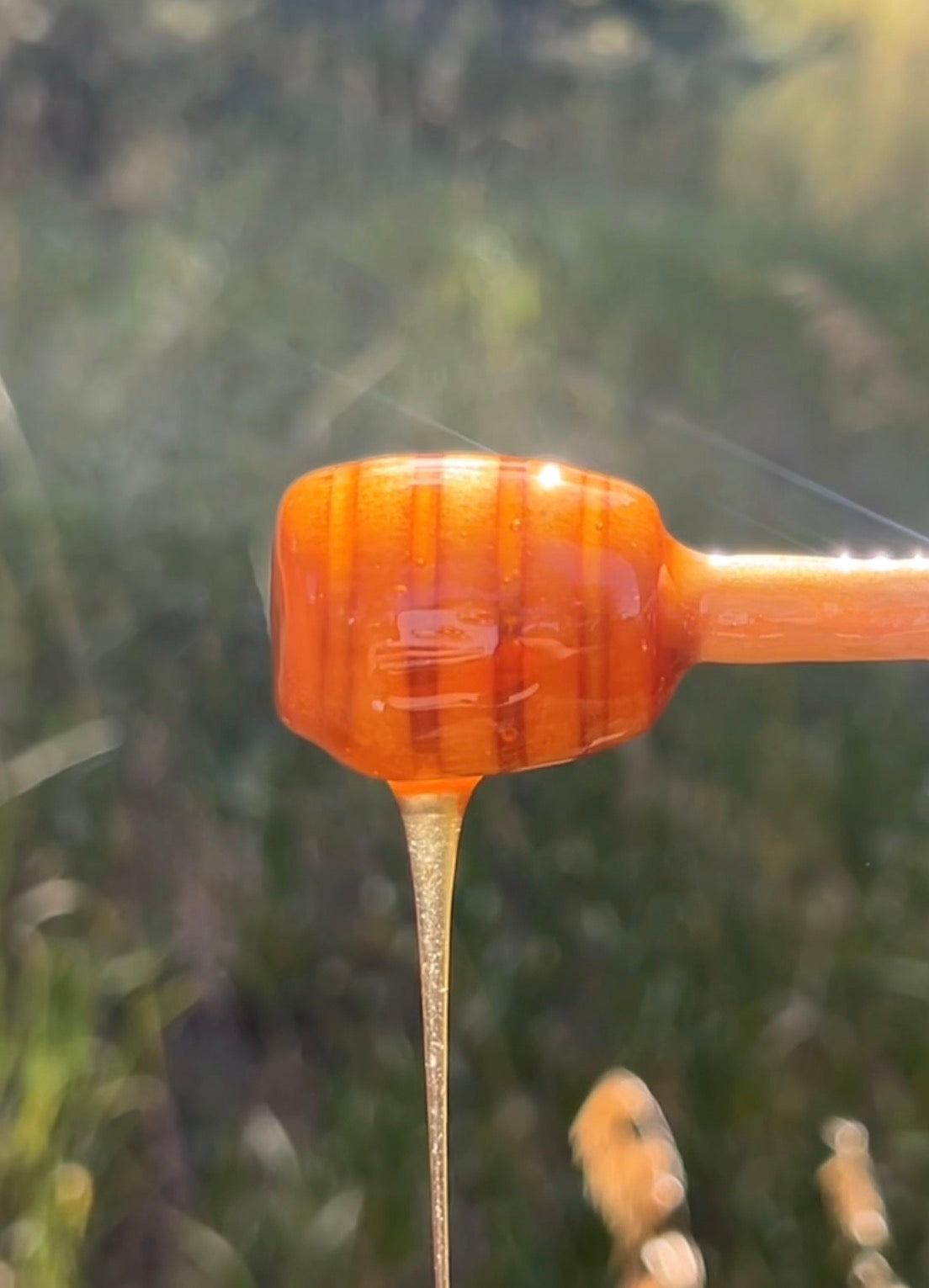
We built Honey House around the Hunt: tracking down bee farms running small, honest operations: Colorado alfalfa, light and floral off the high plains. Clover, from a farm a few states over. Honey pulled cold or barely warmed, strained just enough to catch the wax, never the pollen. Small batches, slower fills, lower yield per jar. And honey that sets up and crystallizes on its own over time — not a bug, a feature.
Honey has a fraud problem
Here's what most people don't know: honey is one of the most faked foods in the country. Cut with rice syrup, corn syrup, cane sugar, then sold as “100% pure.” That kind of fraud is hard to catch precisely because ultrafiltration strips the pollen that would otherwise prove where the honey came from. Raw honey keeps its pollen intact, meaning it keeps its fingerprint. You can trace it. You can trust it.
What you're actually paying for
Every extra dollar goes somewhere specific: small batches, enzymes and antioxidants that heat would've cooked off, real pollen instead of none, a jar that's exactly what it says it is. Nothing added, nothing stripped out.
That's not a markup. That's the cost of not cutting corners.
So next time a raw jar makes you pause at checkout — that's not honey marked up. That's honey that never got watered down in the first place.