Honey is sweeter than granulated sugar by volume, so a one-to-one swap will leave you with an oversweet, overly moist result. The fix is simple: for every 1 cup of sugar a recipe calls for, use 2/3 cup of honey instead. Here's that ratio scaled out, plus the three small adjustments worth making alongside it.
The Ratio, Scaled
|
Sugar Called For |
Use This Much Honey |
Reduce Other Liquid By |
|---|---|---|
|
1/4 cup |
2 Tbsp + 2 tsp |
~2 tsp |
|
1/2 cup |
1/3 cup |
~1 Tbsp |
|
3/4 cup |
1/2 cup |
2 Tbsp |
|
1 cup |
2/3 cup |
~2 Tbsp + 2 tsp |
|
1 1/2 cups |
1 cup |
1/4 cup |
|
2 cups |
1 1/3 cups |
~1/3 cup |

Three Adjustments to Make Alongside It
Cut back on other liquids. Honey is roughly 17% water, sugar is 0% — so every cup of honey you add is also adding liquid the recipe wasn't planning on. The reduction amounts above (about 1/4 cup less liquid per cup of honey) keep the batter's actual wetness in line with what the recipe intended.
Lower the oven temperature by 25°F. Honey's fructose starts caramelizing at a much lower temperature than table sugar does, which is why honey-baked goods brown — and can burn — faster than the recipe's original bake time would suggest. Dropping the oven by 25°F buys back that margin.
Add a little baking soda. Honey is naturally acidic (somewhere around pH 4, compared to sugar's neutral 7), and baking soda neutralizes that acidity while giving the batter a bit of extra lift. A good rule of thumb is 1/2 teaspoon of baking soda for every cup of honey used, even in recipes that don't call for baking soda at all.
Where It Works Best
This swap shines in quick breads, muffins, cookies, granola, glazes, and most things that welcome a little extra moisture and color. It's a tougher fit for recipes that depend on sugar's exact structure — meringues, macarons, hard candy — where the substitution is more of a science project than a swap. For everyday baking, though, it's a straightforward trade that adds real flavor sugar can't.
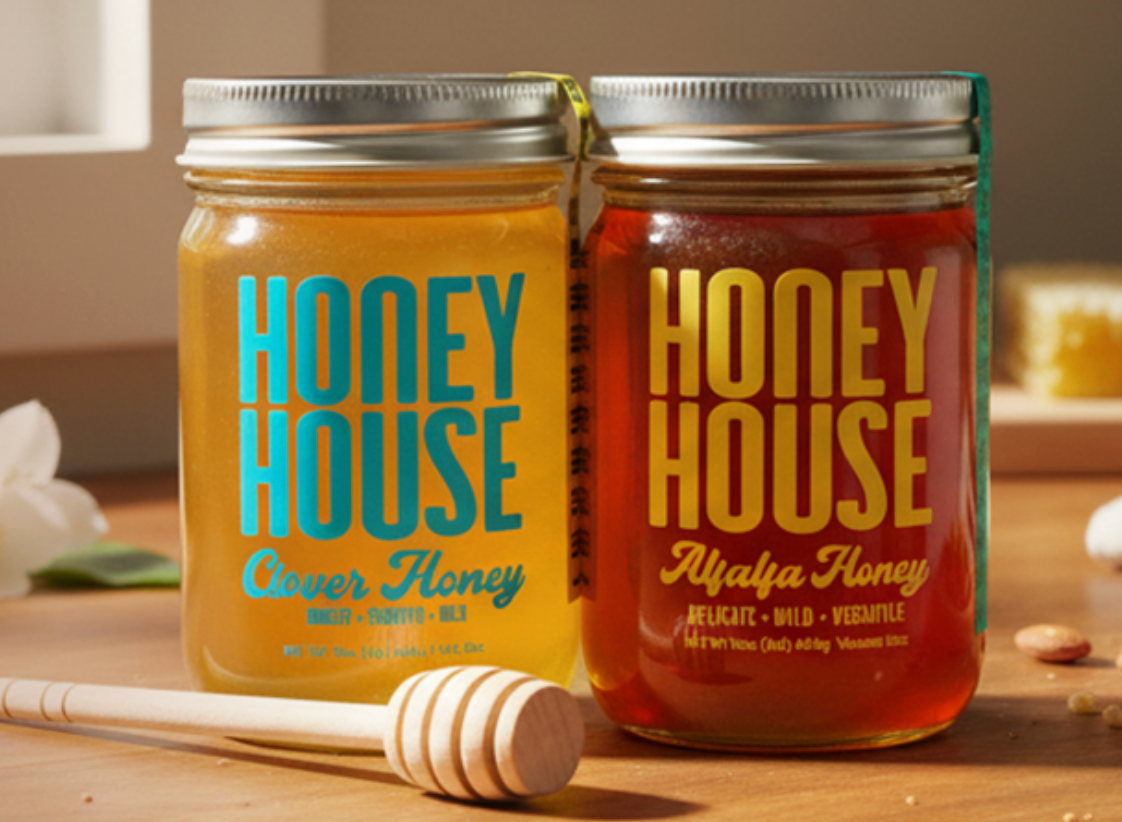
Our Clover Honey is a reliable, all-purpose place to start — mild enough not to compete with whatever you're baking. Measure it out, make the three adjustments, and let it do the rest.